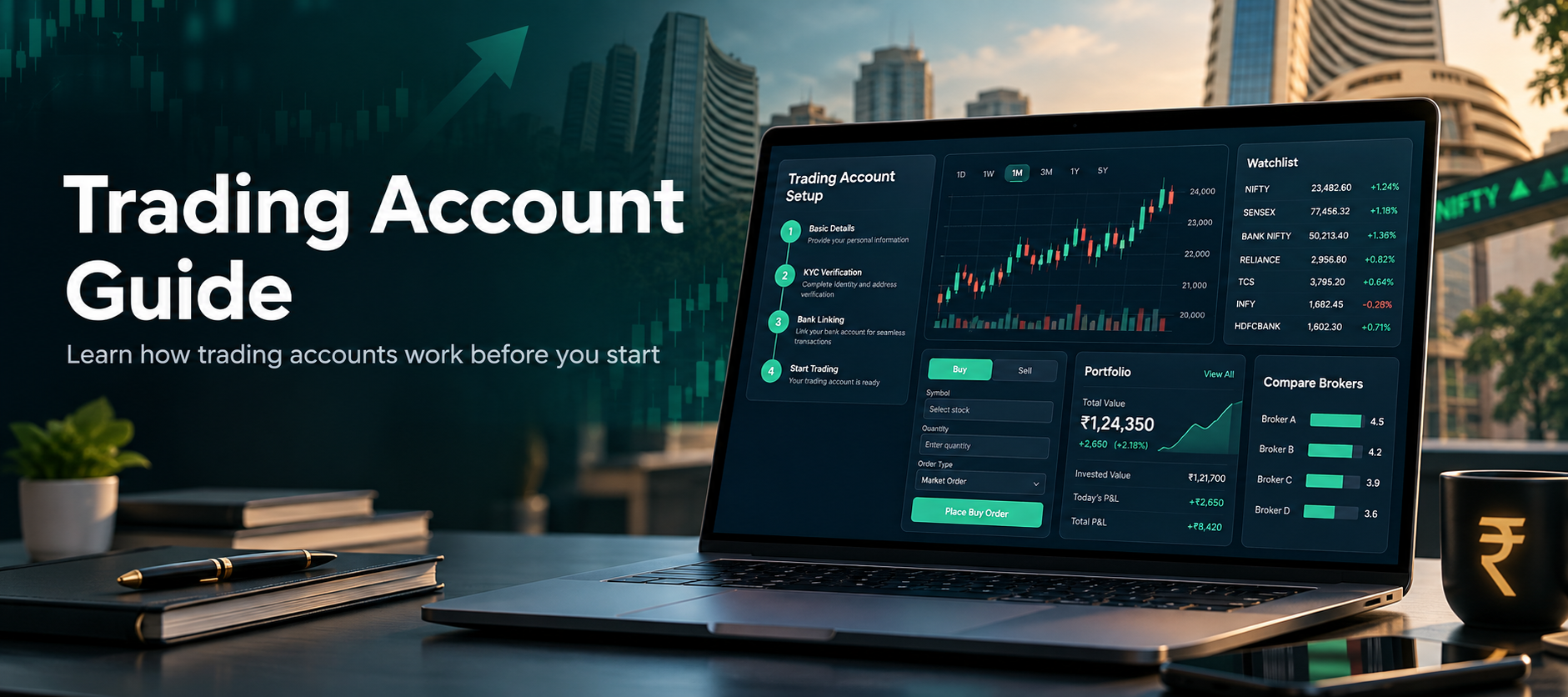
A trading account is one of the most important accounts required to buy and sell shares in the stock market. If a demat account stores your shares, a trading account helps you place buy and sell orders.
For anyone starting their stock market journey, understanding the difference between a trading account and a demat account is very important.
What Is a Trading Account?
A trading account is an account opened with a stock broker that allows you to buy and sell shares, ETFs, derivatives, commodities, currencies and other market products through stock exchanges.
When you place an order to buy or sell shares, the order is placed through your trading account. The broker sends this order to the stock exchange, and once the order is executed, the shares are credited or debited from your demat account.
Trading Account vs Demat Account
Many beginners get confused between a trading account and a demat account.
A trading account is used to place buy and sell orders.
A demat account is used to hold shares and securities in electronic form.
A bank account is used to transfer money for buying shares and receiving sale proceeds.
In simple words, the trading account is used for transactions, the demat account is used for holding securities, and the bank account is used for money movement.
How a Trading Account Works
When you buy shares, money is debited from your linked bank account or trading balance. The order is executed through the exchange, and the shares are later credited to your demat account.
When you sell shares, the shares are debited from your demat account, and the sale amount is credited to your trading account or bank account after settlement.
This process is handled through the broker’s trading platform.
Why You Need a Trading Account
You need a trading account if you want to invest or trade in the Indian stock market.
A trading account allows you to buy and sell stocks, apply for IPOs, trade in futures and options, invest in ETFs, buy bonds, invest in mutual funds and track your portfolio from one place.
Different brokers offer different features, charges and platforms, so choosing the right broker is important.
Types of Trading Accounts
Most brokers offer standard trading accounts for equity investors and traders.
Some brokers also offer specialised accounts for futures and options, commodity trading, currency trading, NRI trading and margin trading facility.
Before opening an account, check whether the broker supports the products you want to trade.
Popular Trading Account Providers in India
Some popular brokers in India include Zerodha, Groww, HDFC SKY, Upstox, Angel One, ICICI Direct, Kotak Securities, Motilal Oswal, 5paisa and Dhan.
Each broker has a different pricing model, trading platform, research support, customer service quality and account features.
Charges in a Trading Account
Before opening a trading account, users should compare all important charges.
Common charges include account opening charges, annual maintenance charges, brokerage charges, intraday trading charges, futures and options brokerage, DP charges, call and trade charges, payment gateway charges and other statutory charges.
Some brokers offer zero brokerage on equity delivery, while others charge a flat fee or percentage-based brokerage.
How to Choose the Right Trading Account
A good trading account should be easy to use, transparent in pricing and suitable for your trading style.
Beginners may prefer a simple platform with low charges and easy account opening. Active traders may prefer advanced charts, fast order execution, option chain tools, margin facility and stable trading platforms.
Long-term investors should also check research quality, portfolio tracking, IPO support, mutual fund access and customer support.
Best Trading Account for Beginners
For beginners, the best trading account is usually one that is simple, low-cost and easy to understand.
Platforms like Groww, Zerodha, HDFC SKY and Upstox are commonly considered by beginners because they offer simple digital account opening and easy-to-use platforms.
However, users should compare charges, features and support before making a final decision.
Best Trading Account for Active Traders
Active traders should focus on platform speed, charting tools, order types, F&O charges, margin availability and reliability during market hours.
Brokers like Zerodha, Dhan, FYERS, Angel One and Upstox are often compared by traders because of their trading platforms and active trading features.
Documents Required to Open a Trading Account
To open a trading account in India, you usually need PAN card, Aadhaar card, bank proof, income proof for derivatives trading, passport-size photograph and mobile number linked with Aadhaar.
Most brokers now offer online account opening through Aadhaar-based eKYC.
Final Thoughts
A trading account is your gateway to the stock market. The right account can make investing and trading easier, while the wrong account may lead to higher costs and poor user experience.
Before opening an account, compare brokerage, platform quality, account charges, research, customer support and product features. Always verify the latest charges and terms directly from the broker’s official website before making a decision.